UNPLUGGED AND OUTSIDE: HOW FAMILIES RECONNECT IN BC’S BACKCOUNTRY
THERE ARE NO SCREENS. NO SCHEDULES. JUST THE WORK OF MOVING TOGETHER THROUGH MOUNTAIN TERRAIN.
Backcountry riding demands presence. Terrain, weather, decision-making. You don’t get to be halfway in the mountains. And maybe that’s why riding as a family out there feels different. More honest. More connected.
LEARNING IN THE MOUNTAINS TOGTHER
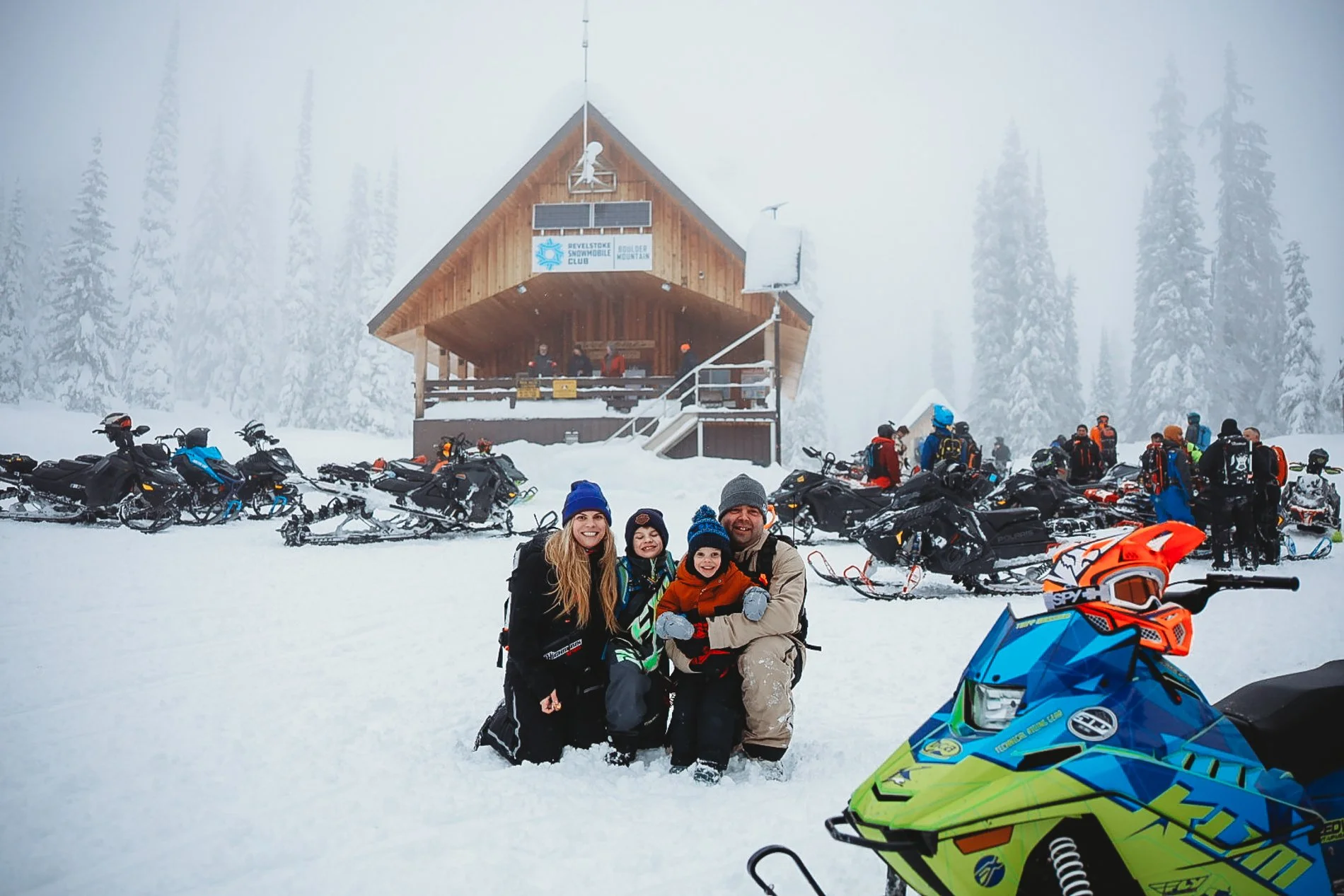
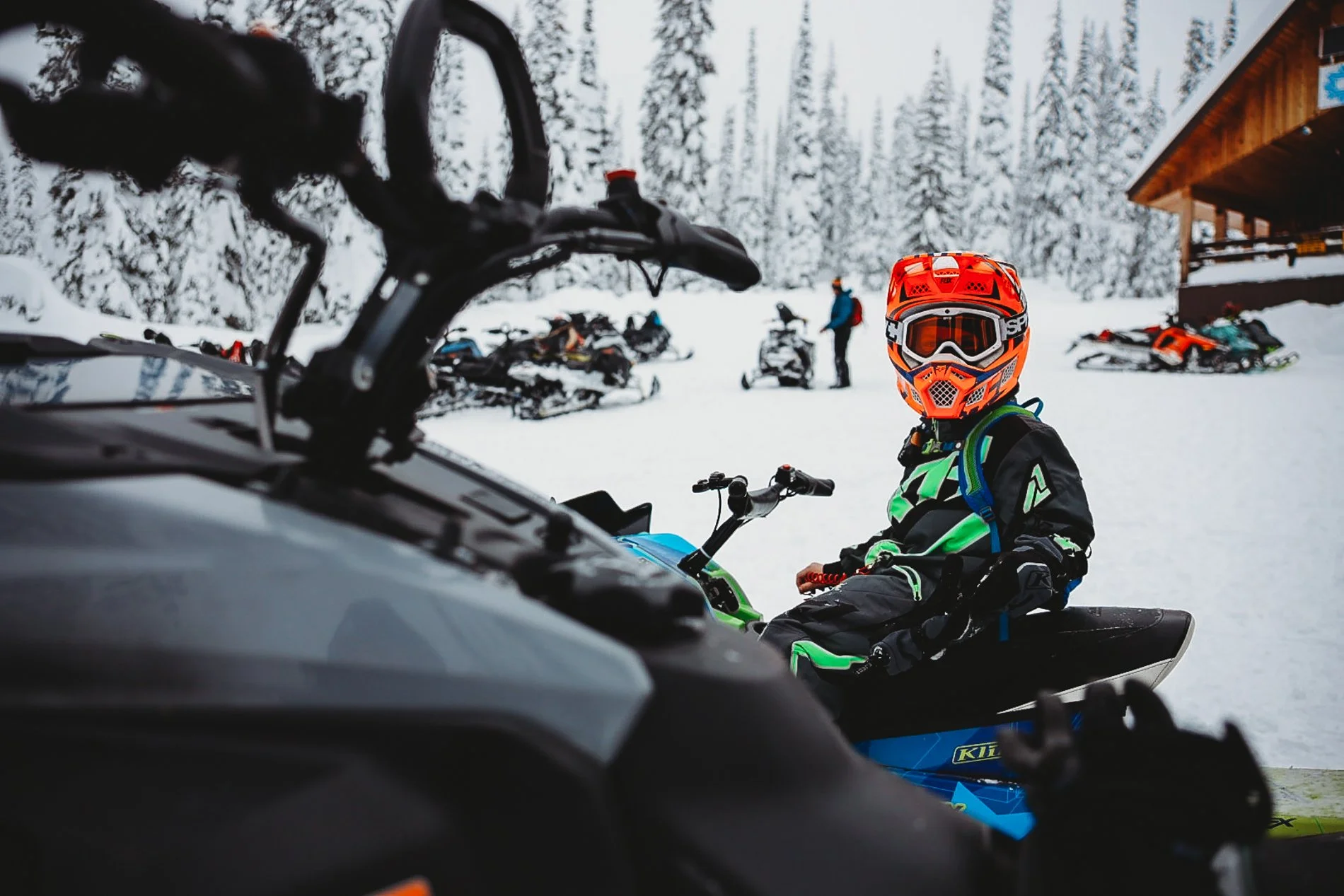
I’m a mom of two boys — William, 8, and Jakob, 3. We started riding in the flatlands of Alberta, where space is wide and forgiving. But now, based in Revelstoke, our riding has shifted into the mountains. This winter, my partner and I brought the kids into the backcountry for the first time, riding up Boulder Mountain, past the cabin, and into the trees.
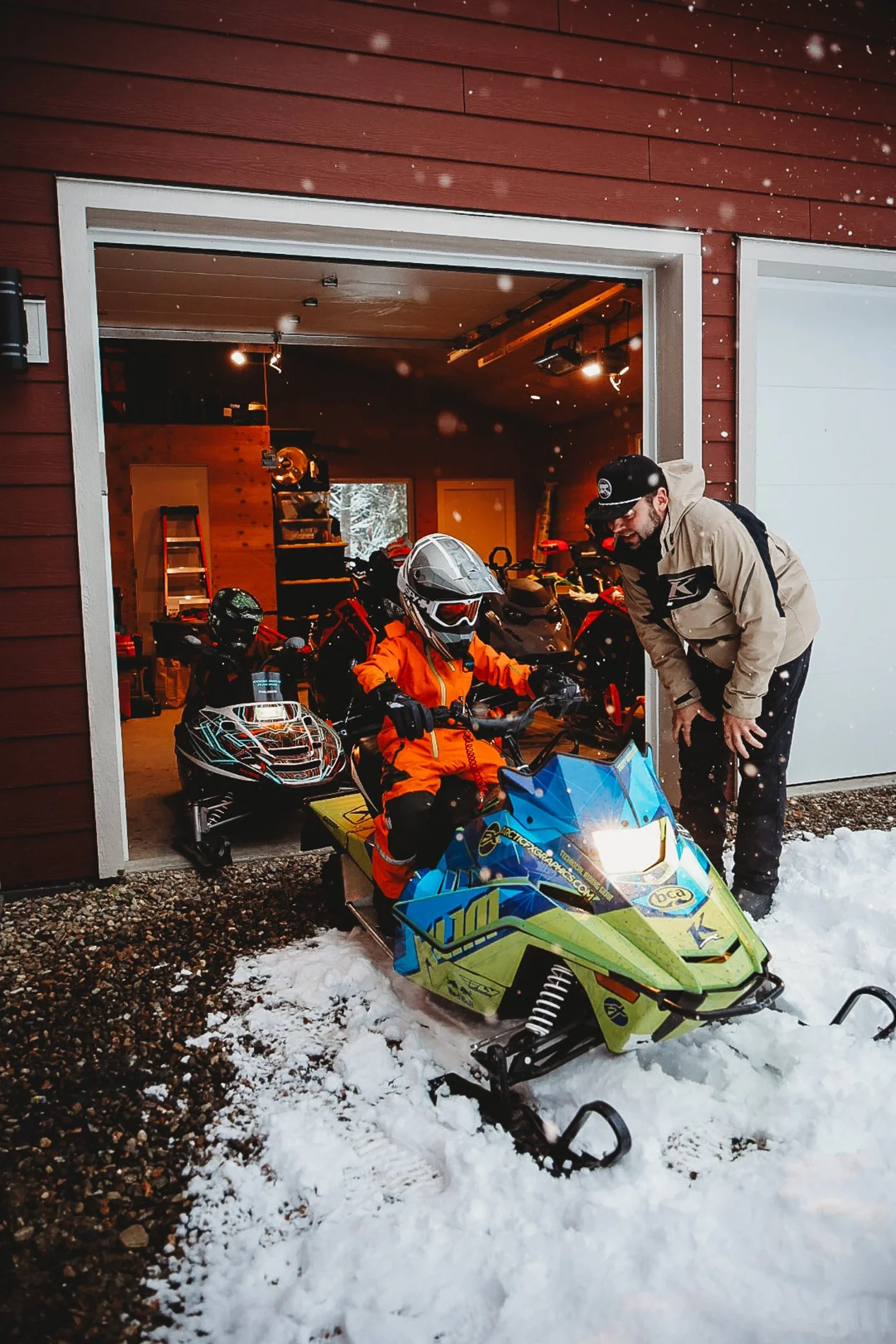
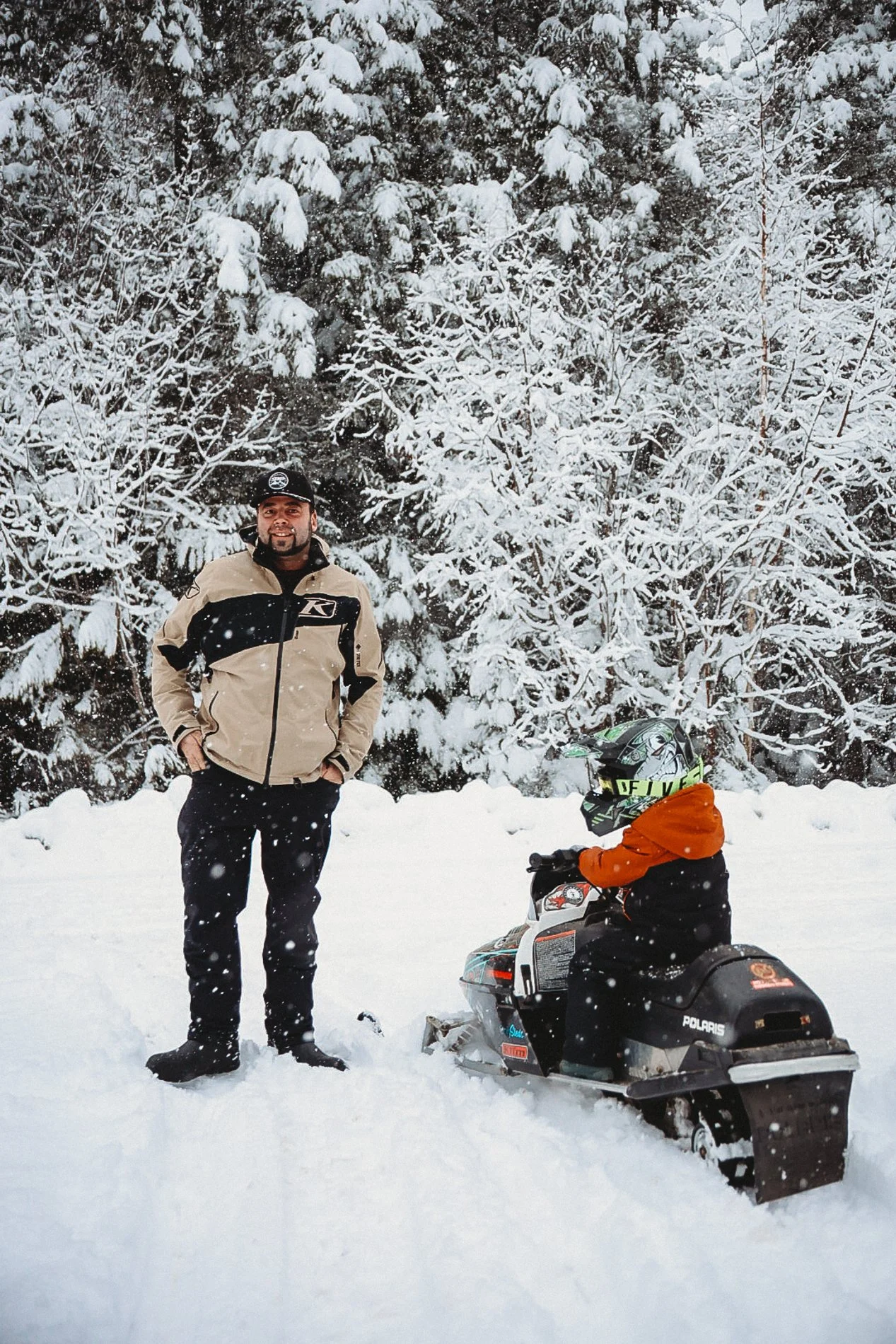
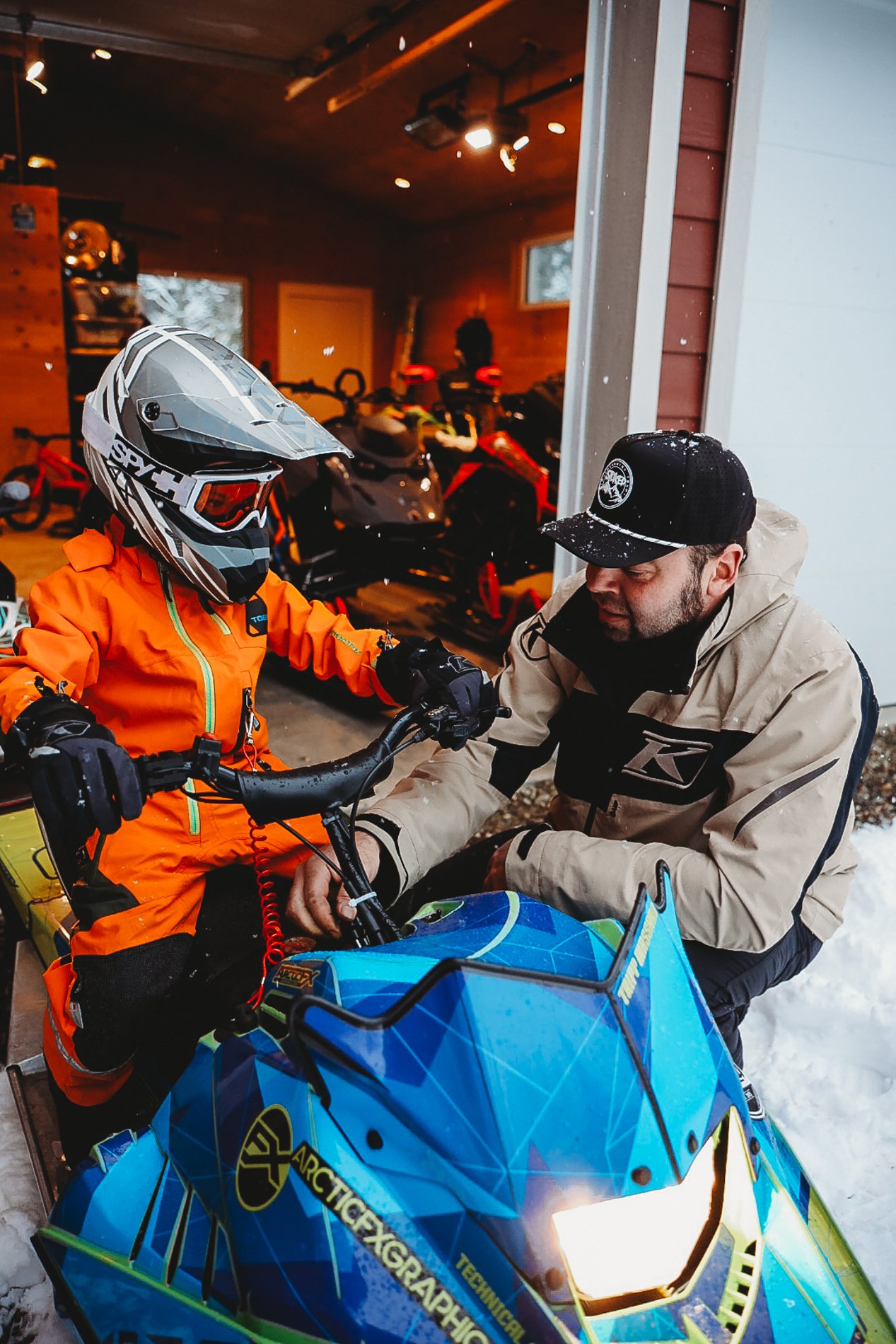
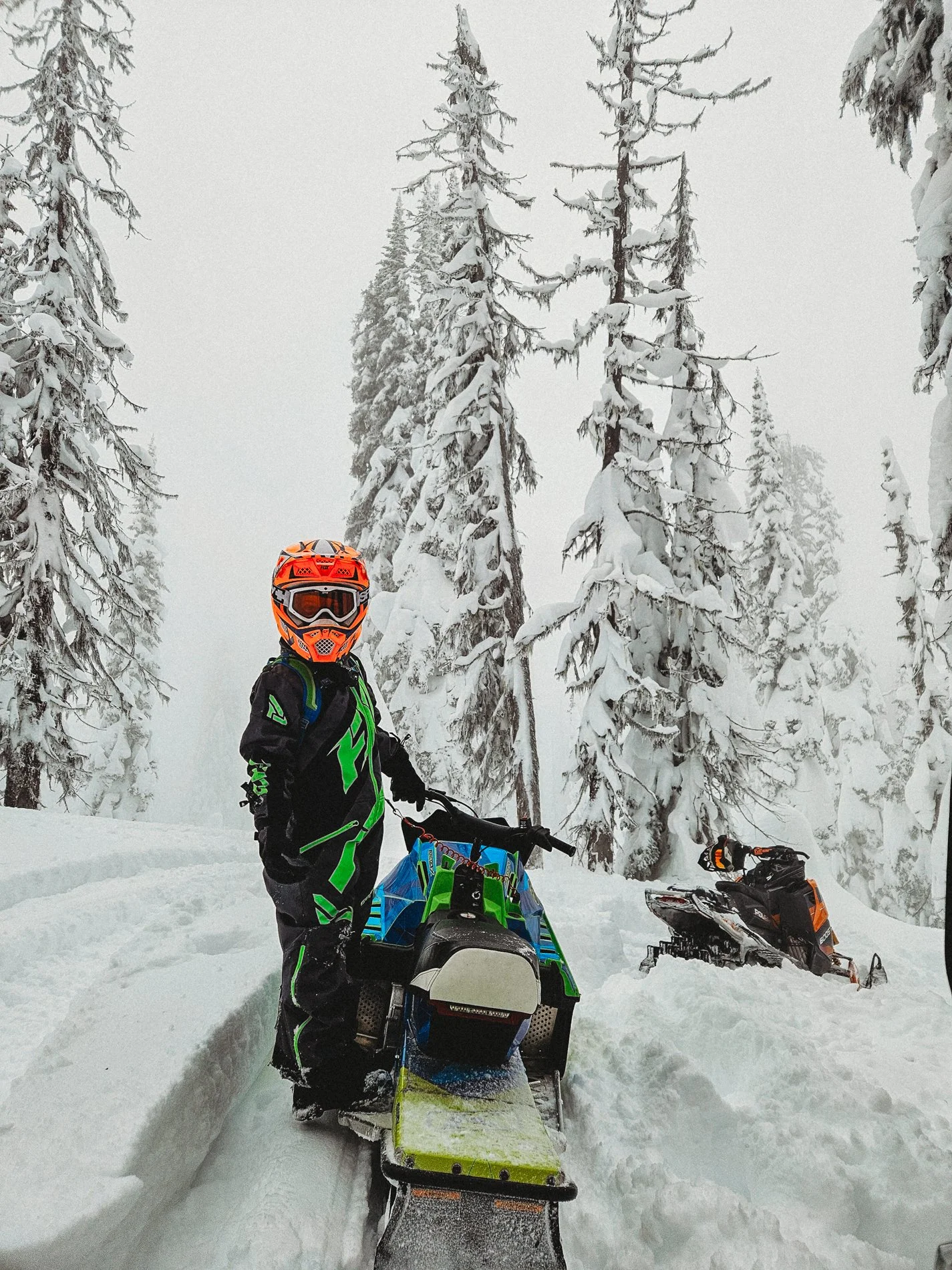
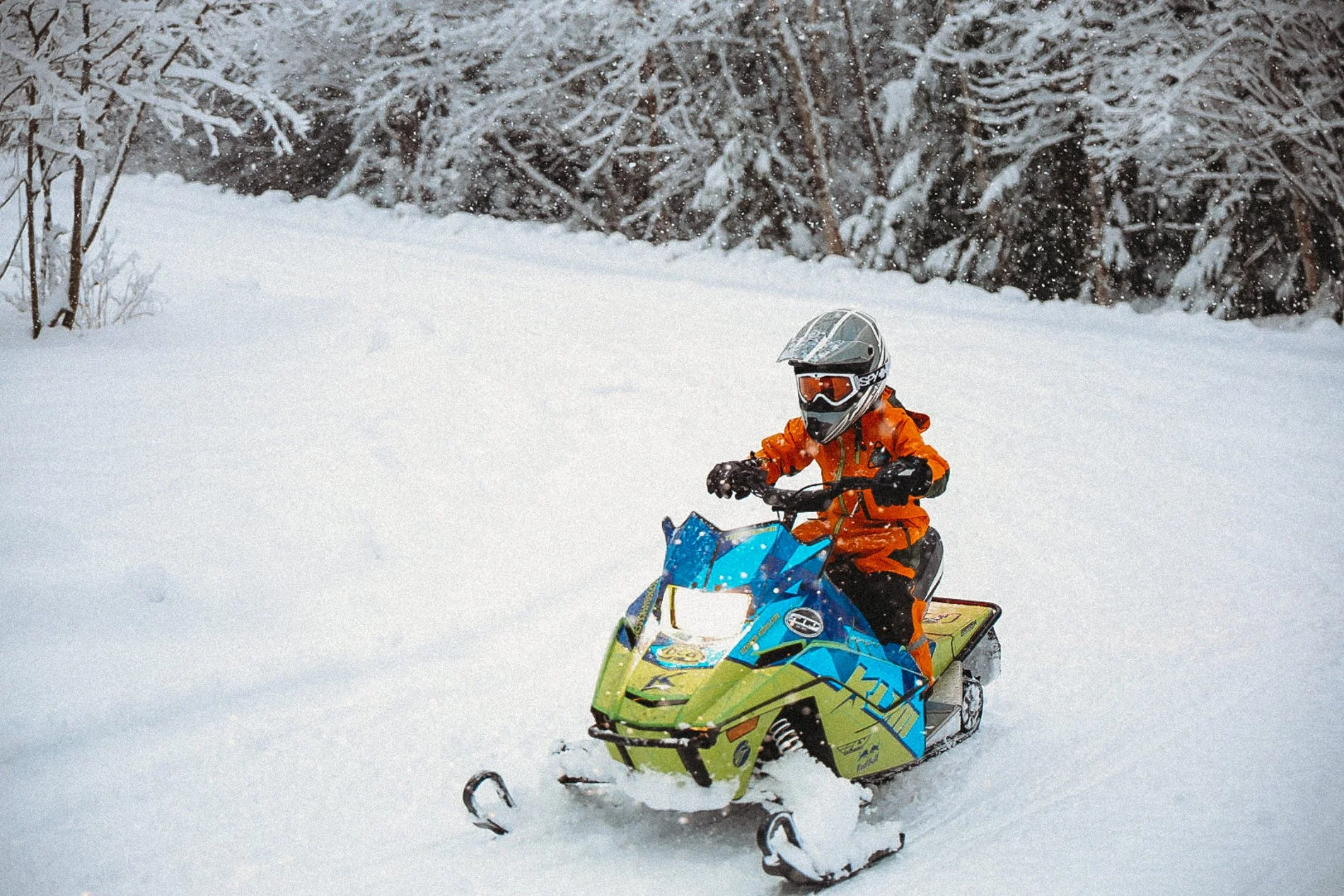
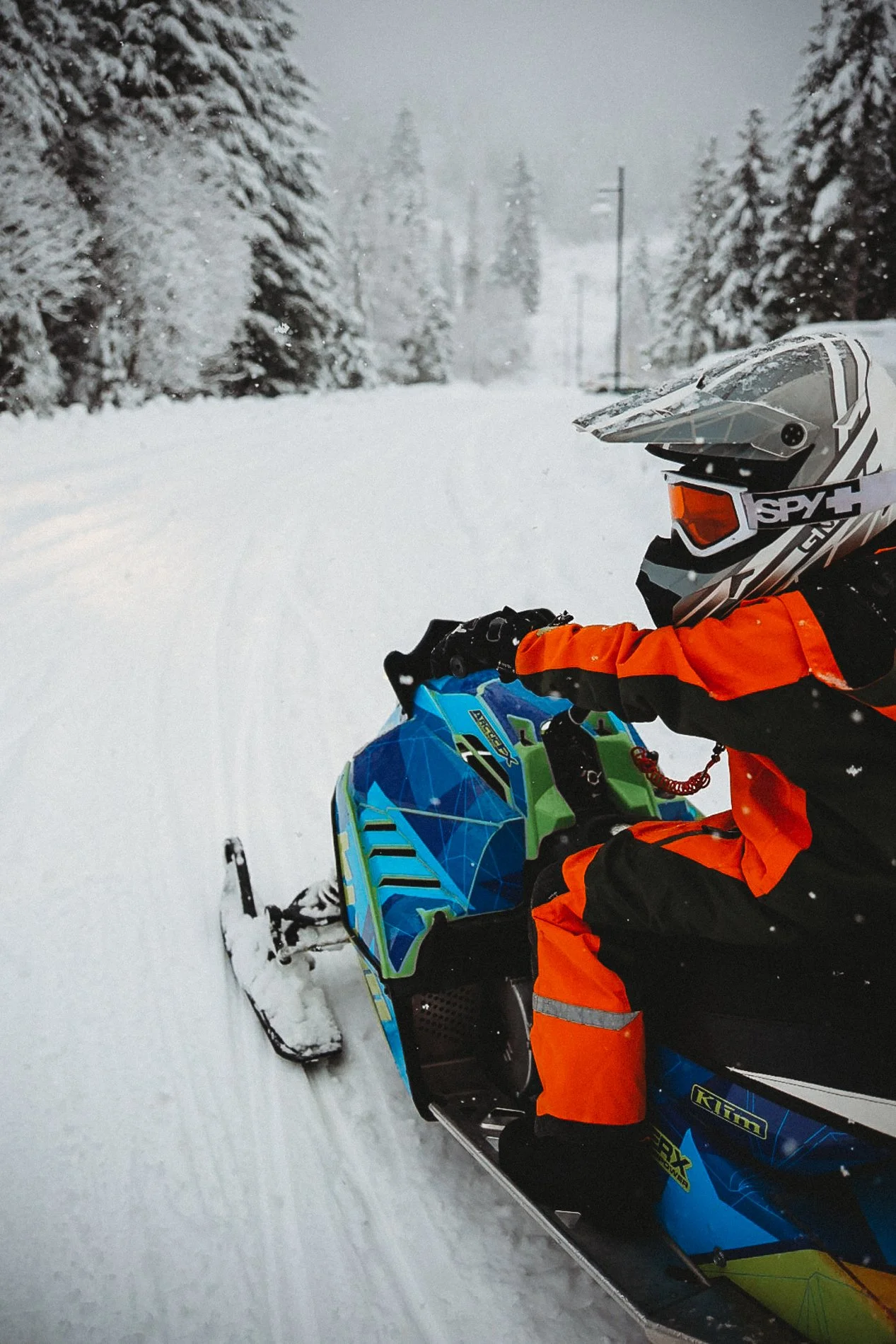
Jakob doubled with me, fully trusting the process. William rode his Arctic Cat 200 (a hand-me-down from my partner’s son, who is now 12) on his own — real terrain, real responsibility. He followed directions from my partner over the radio, learning how to communicate and respond clearly. He learned how to move predictably in shared terrain, and how to think ahead instead of react.
This wasn’t trail riding. This was mountain riding — deliberate and intentional.
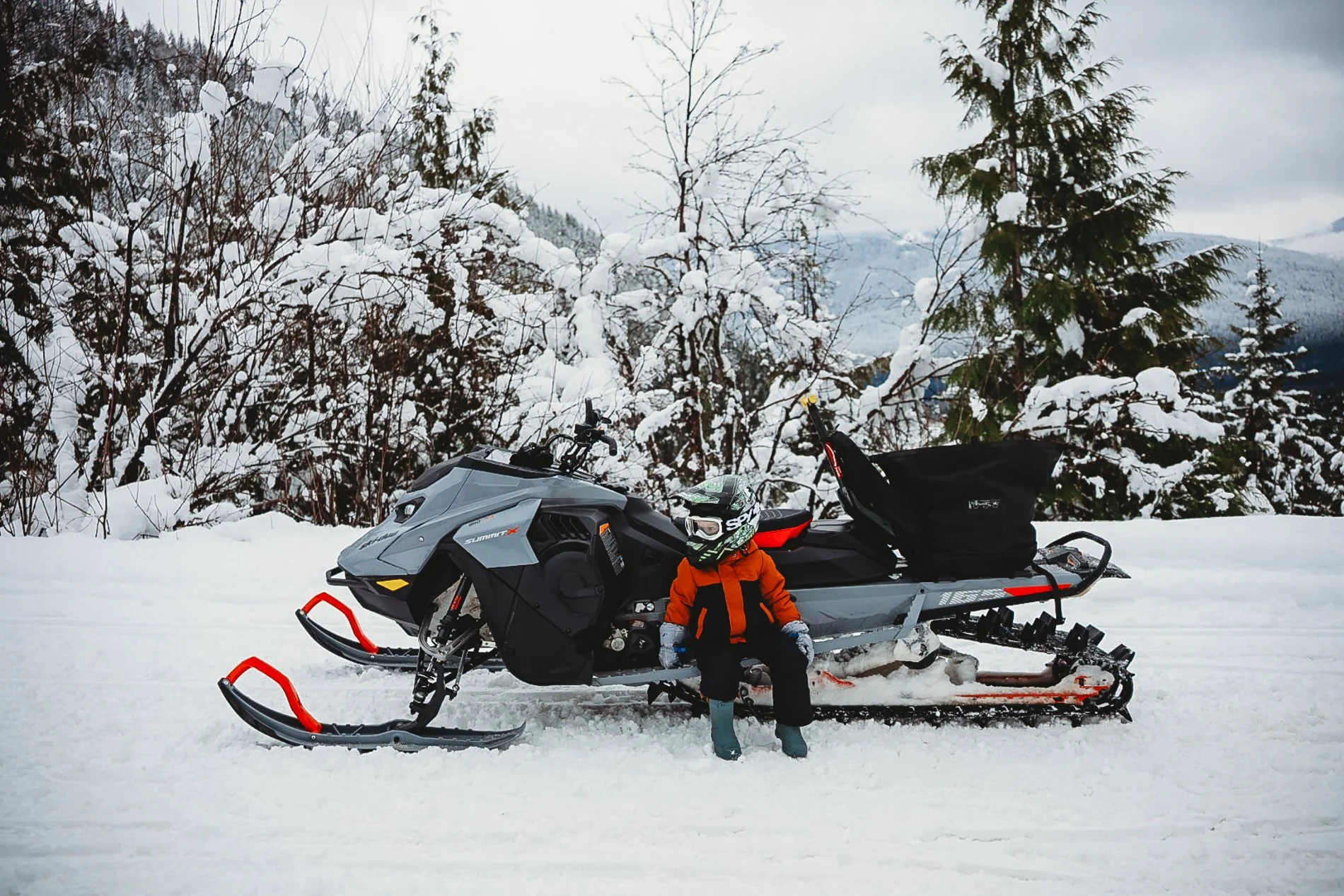
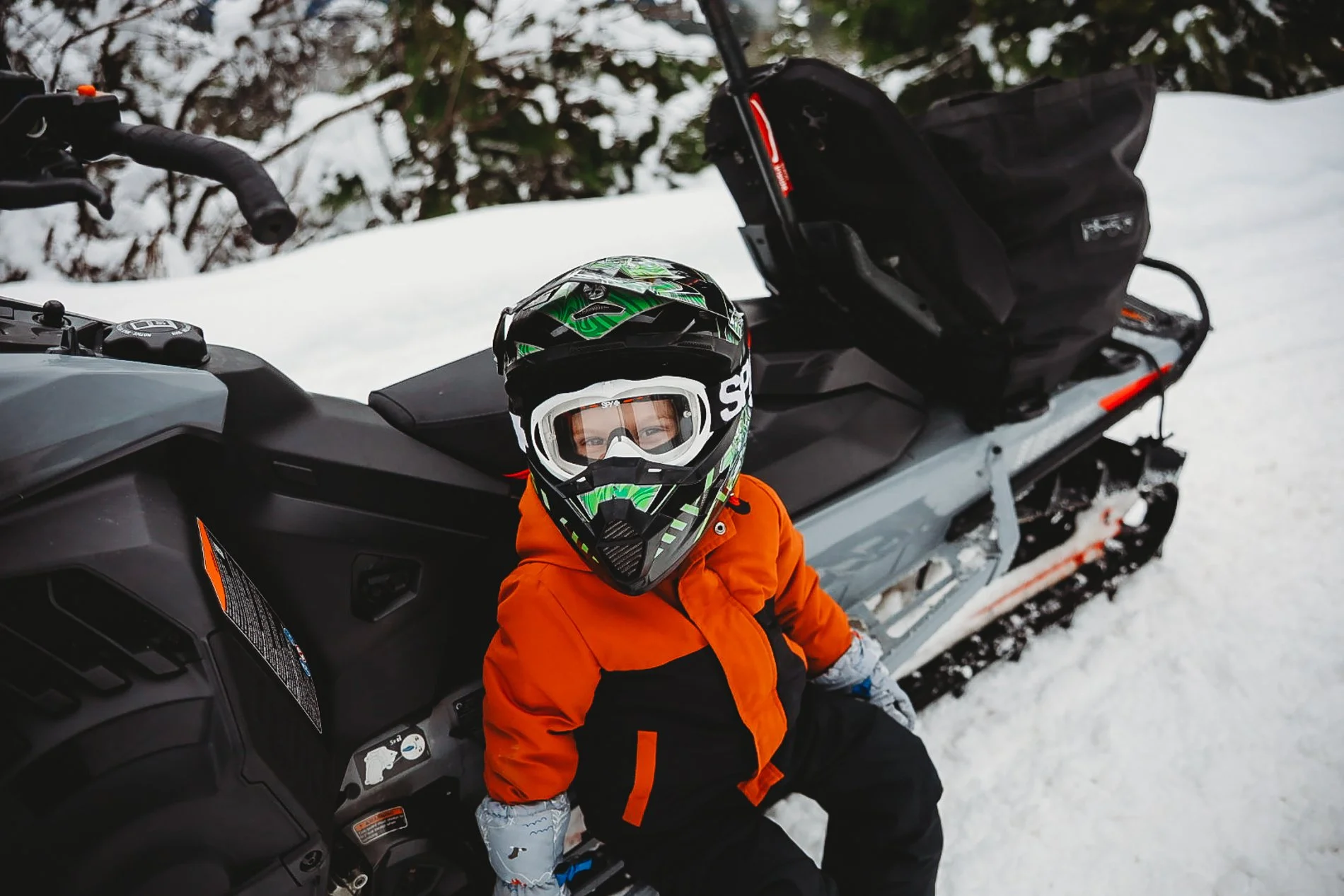
My tunnel bag was fuller than it’s ever been. Dry gloves. Extra socks. Layers. Snacks. More snacks. Hand warmers. Headlamps. The kind of loadout you don’t think about when you’re riding solo, but can’t afford to forget when you’re responsible for small humans in a big environment. Preparation wasn’t optional; it was part of the ride.
When we arrived at the cabin, fellow riders came up to William and told him how awesome he was, followed by a fist-pump and congratulations. That nervous little boy from the parking lot was now beaming from ear to ear with pride.
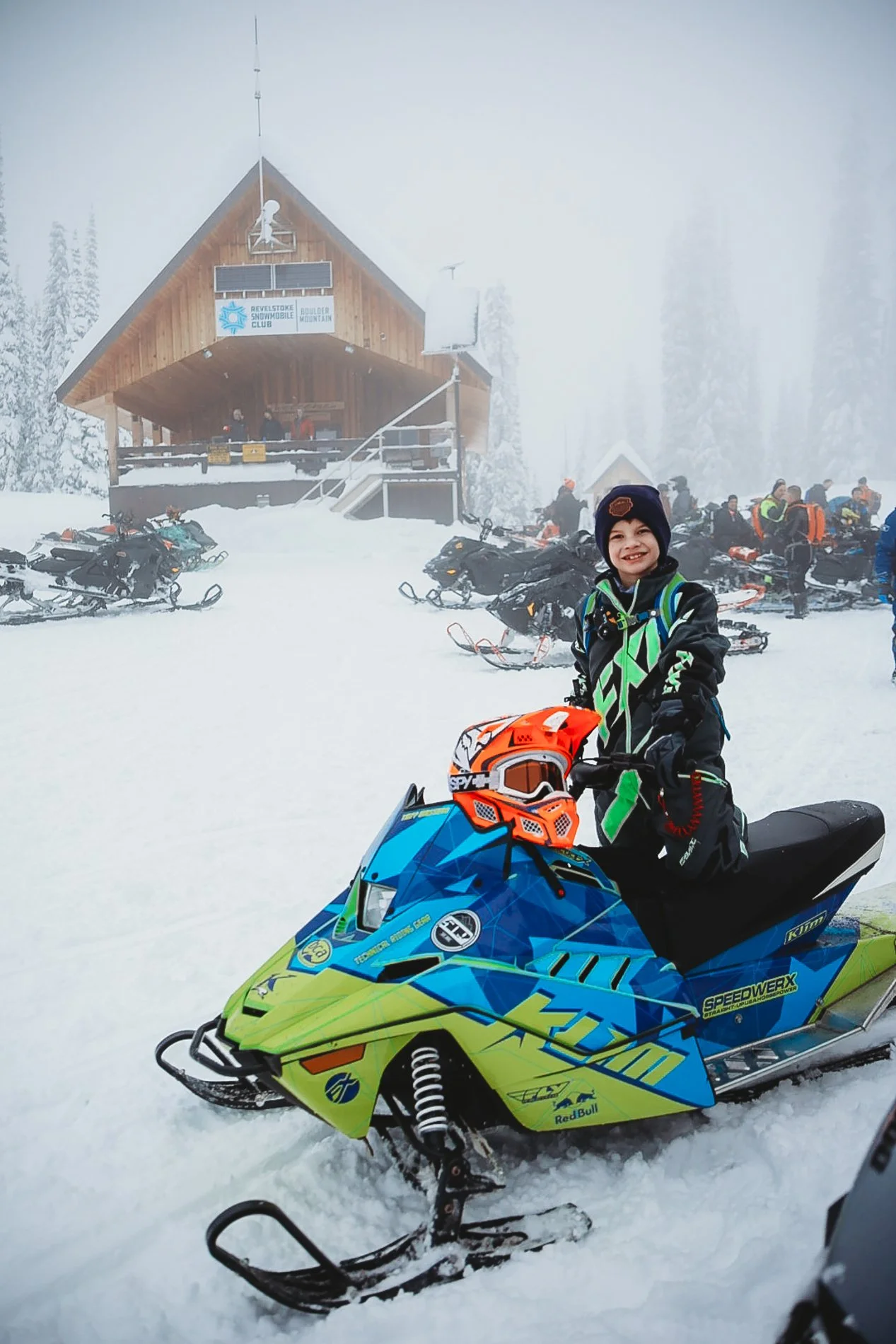
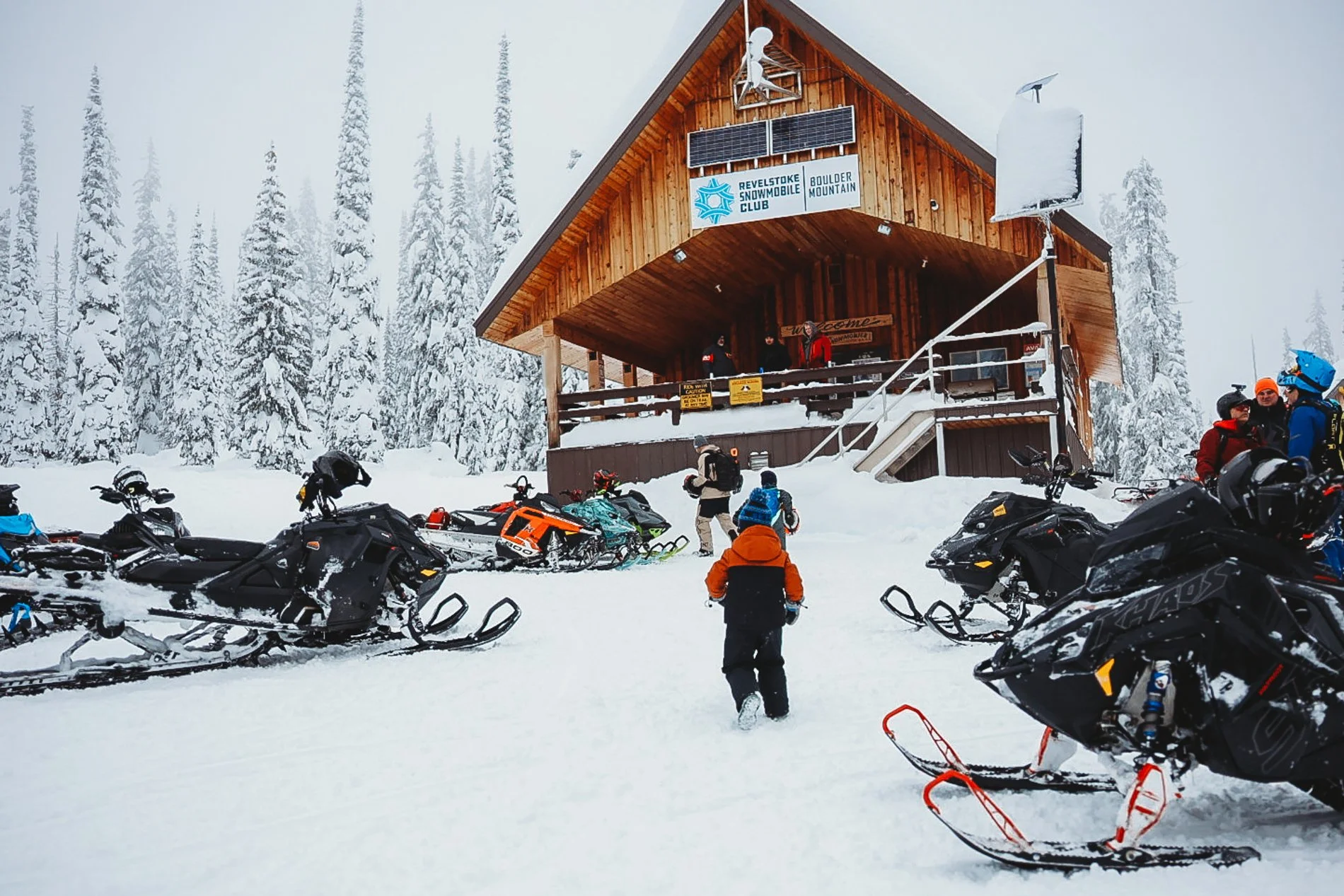
More than one person told us they wished they had done this when their kids were younger.
It wasn’t regret exactly — more like an acknowledgement of how quickly time passes and how sacred these memories with your children become.
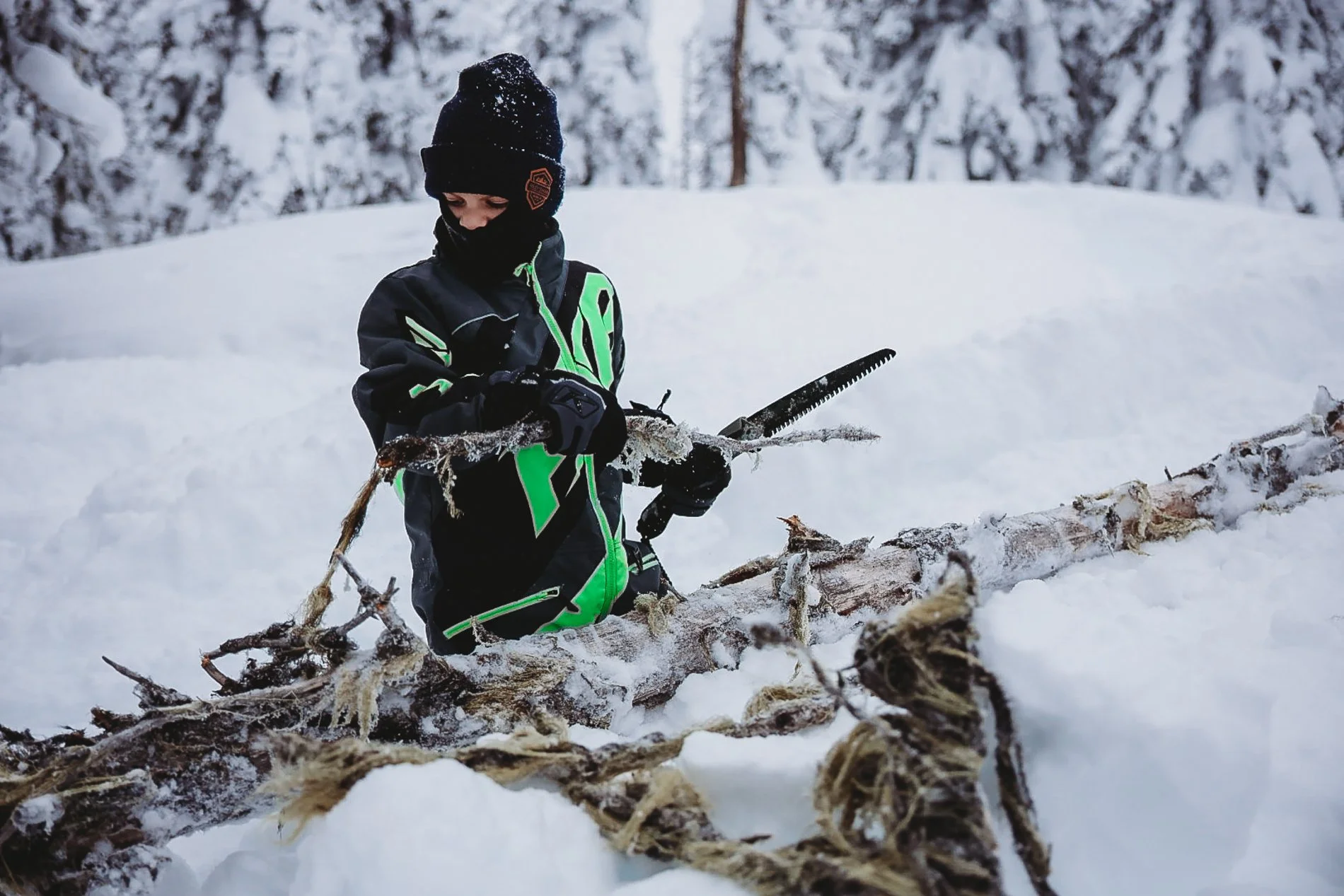
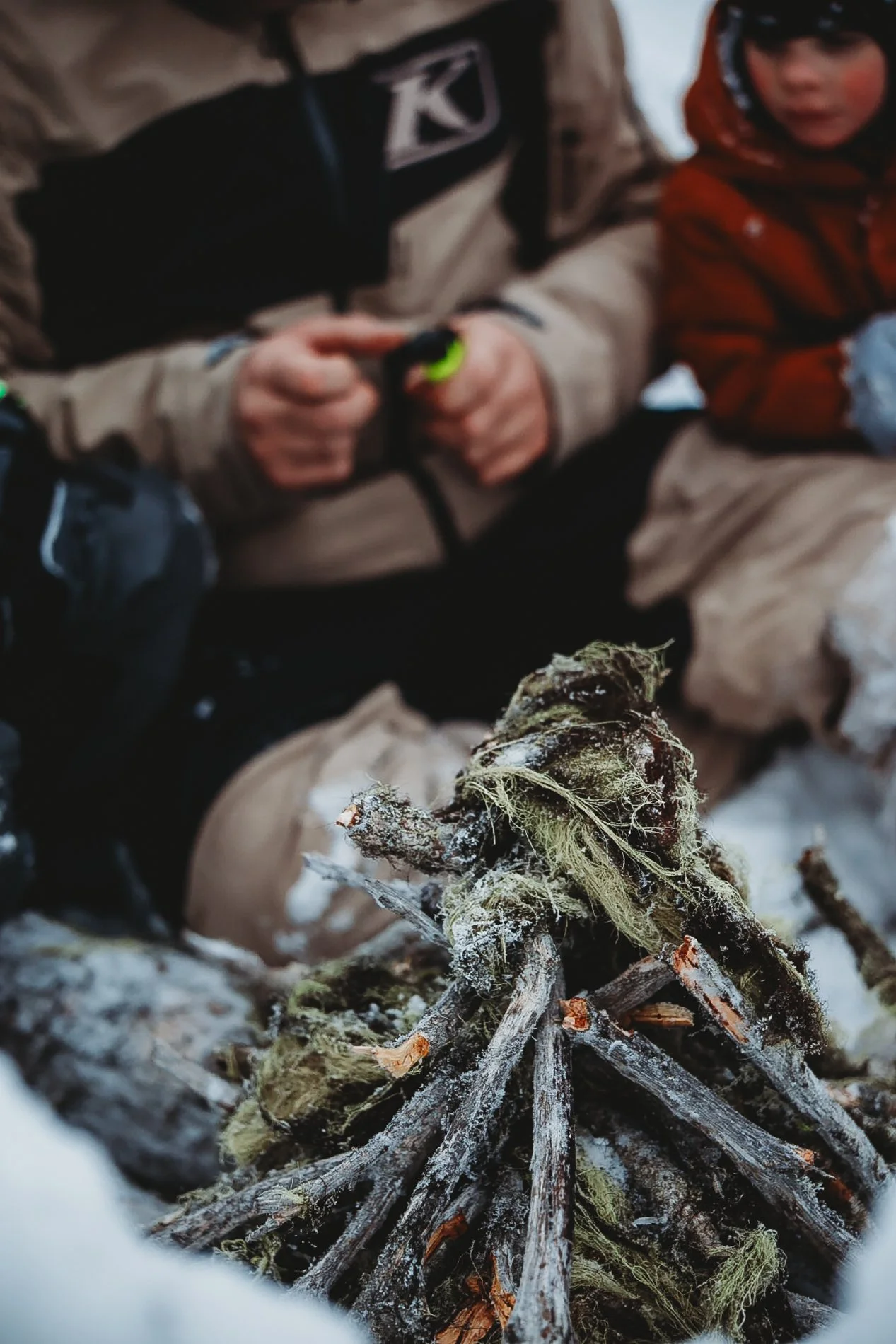
When we reached our destination in the trees not far from the cabin, we unpacked our shovels and built a snow cave together. Digging, giggling, and throwing snow. Jakob was very helpful with his little garden shovel. We lit a fire and roasted wieners as the light started to fade. Nothing rushed. Nothing scheduled.
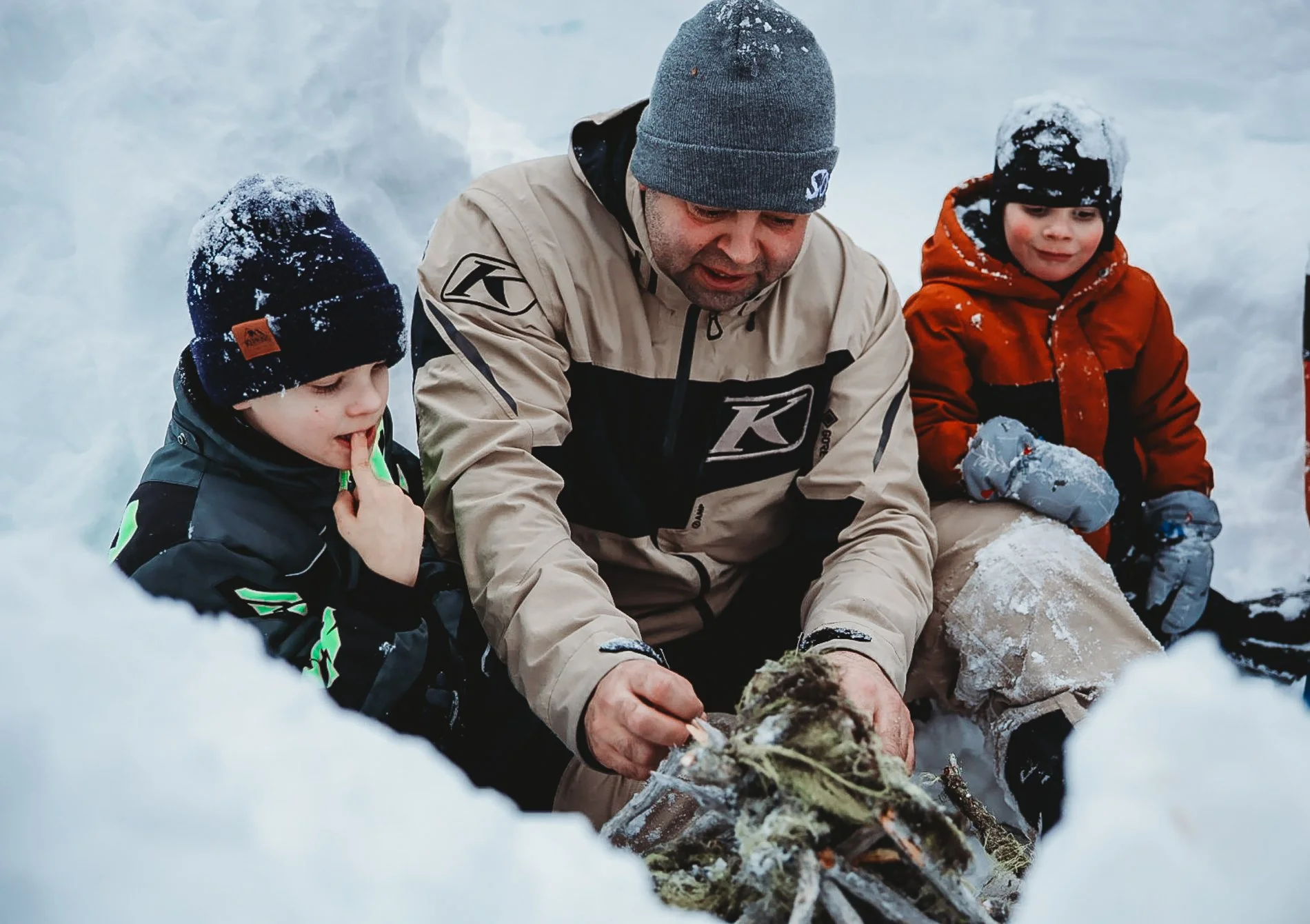
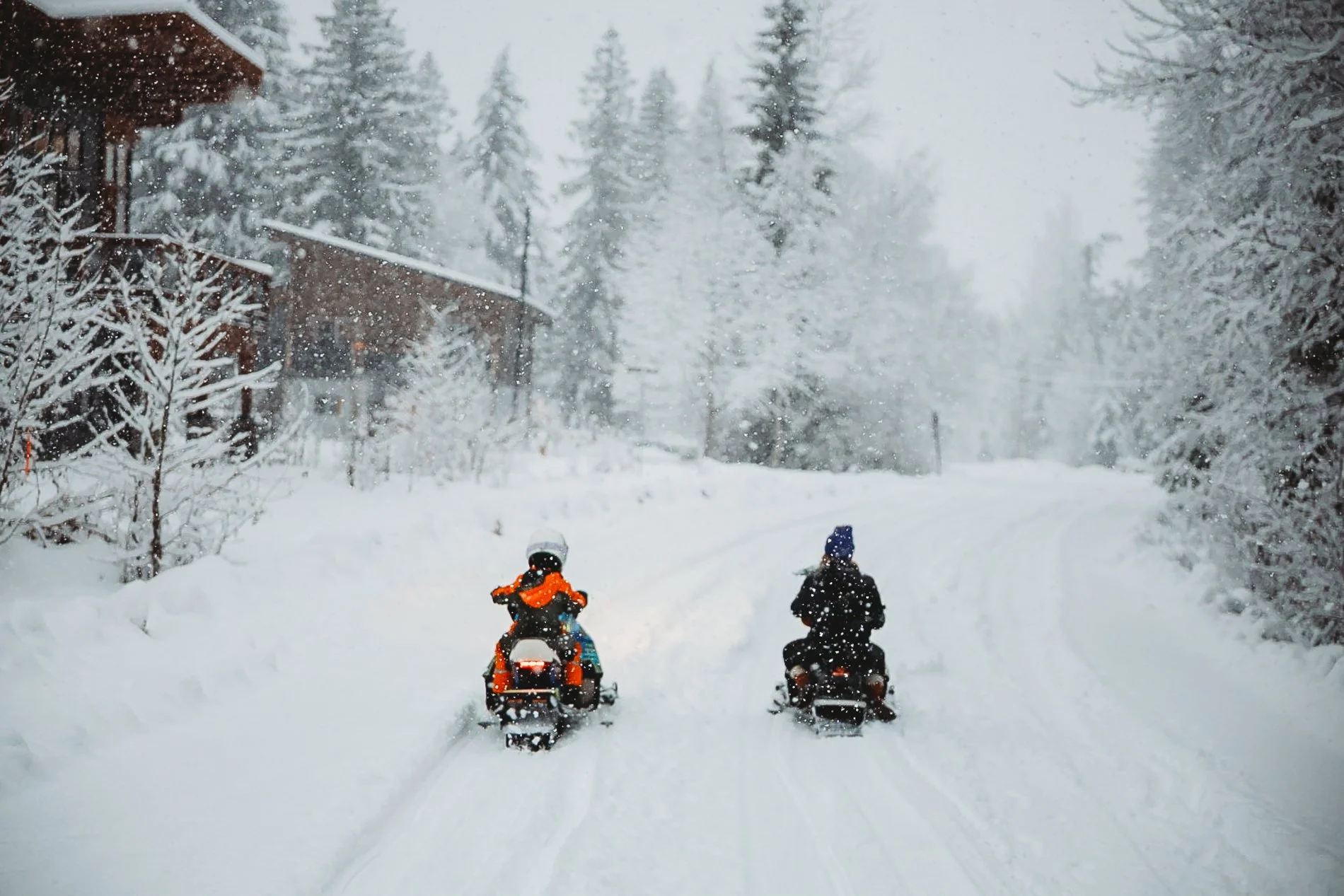
On the way down, it was pitch black. Headlights led the way. We made short pit stops to rest little thumbs. The entire time down, I kept thinking how lucky I am to share these memories with my boys. Jakob sitting between my legs saying, “Yahoo!” or “Go superspeed, Mommy!” William following behind — and sometimes even leading out in front.
THE WEIGHT OF WATCHING THEM GROW
Watching your children grow up in real time is overwhelming. You see it happen in moments like these — when they take responsibility, when they stop needing help in the same way, when their confidence shows up before you’re ready for it.
The mountains don’t soften that reality. They sharpen it.
Riding backcountry as a family asks parents to loosen their grip just enough. To guide without controlling. To trust the systems you’ve put in place — and the kids who are learning to use them.
That balance is uncomfortable. But it’s also where growth happens.

PATIENCE AS A SKILL
Family backcountry riding requires an active kind of patience. You plan more. You stop often. You accept that progress will be slower than it would be alone.
But that pace creates space.
Space to talk through decisions. Space to notice changing conditions. Space to teach kids that the mountains aren’t something to rush or conquer — they’re something to move through with respect.
These aren’t just memories. They’re reference points. Experiences kids will draw from long after the sleds are parked.
A FEW THING WE’VE LEARNED
For families considering backcountry riding with young kids:
Choose terrain with intention. Favor learning zones over distance or difficulty.
Overpack, on purpose. Extra layers, extra gloves, extra food. Comfort and safety buy confidence.
Use communication tools. Radios give kids responsibility and clarity.
Teach mountain awareness early. Talk about terrain, visibility, and decision-making — not just riding.
Plan for slowness. Build patience into the day.
Let conditions lead. Adjust plans without forcing outcomes.
RIDE WHILE YOU CAN
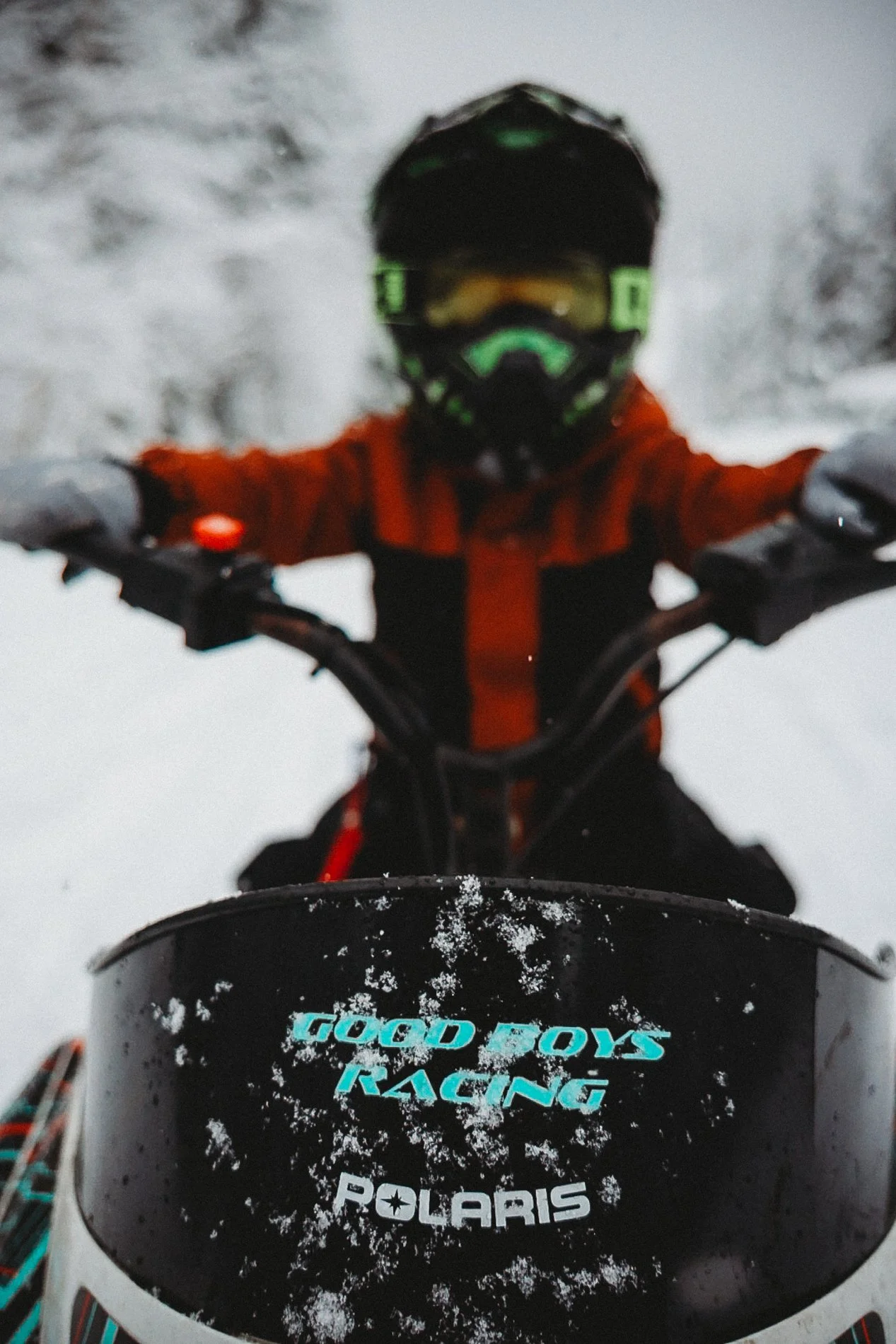
Riding as a family changes the way you experience the mountains. You don’t just remember where you went — you remember who they were at that age. The way their voices sound over the radio. How small their gloves look wrapped around the bars. The moment when fear turns into confidence, right in front of you.
These days don’t repeat themselves. Kids grow fast, and the version of them who wants to sit close and share in the simple moments won’t last forever. There will always be reasons to wait — for more time, more skill, better conditions. But capability comes from being trusted, from being included, from doing it together.
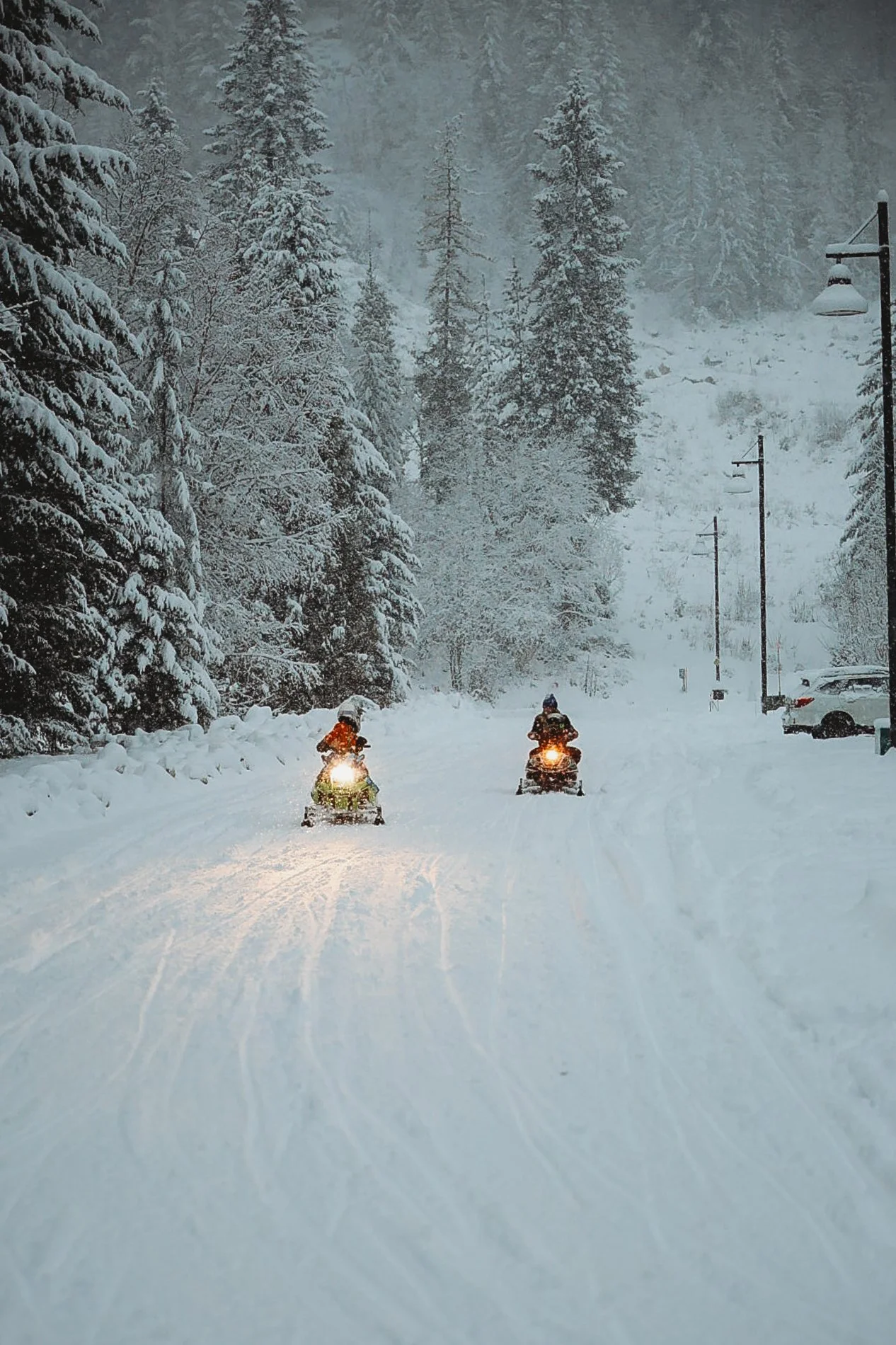
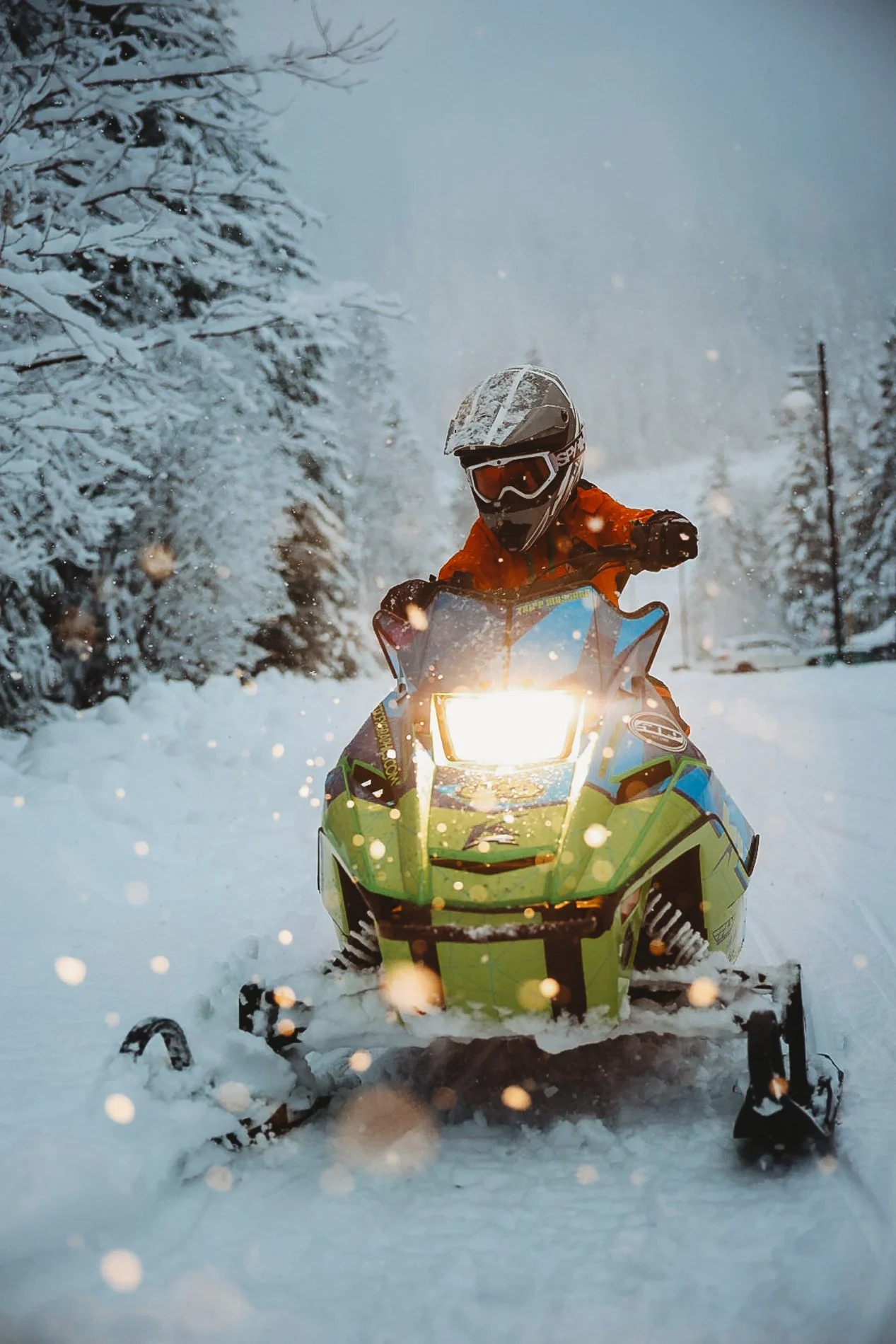
When you ride now, you’re not just teaching skills. You’re building shared memories that stick — the kind that stay with them, influencing how they see challenge, connection, and themselves.
The mountains give you the space to slow down and notice it all. And when experienced as a family, those moments grow roots. They show up later — in stories, in confidence, and in the way our children move through the world.

Words & photos: Megan Dawn
Revelstoke, BC